Health Benefits of Spinach
Blood Pressure Pumping and Blood Health
Spinach is rich in dietary nitrates, which the body converts to nitric oxide. Those are signalling molecules that help relax blood vessels and can lower blood pressure. The effect is modest, but meaningful enough once you consider the fact that this is dietary assistance. Spinach, as a whole food, helps deliver nitrate alongside vitamins and polyphenols that may enhance or stabilize the vascular response. Spinach contains nonheme iron, folate, and vitamin C. That means spinach can help support red blood cell production and energy.
Antioxidant and Anti-Inflammatory Effects
Spinach contains carotenoids such as lutein and zeaxanthin. Those, plus flavonoids and other polyphenols, help fight against free radicals and modulate inflammatory pathways. Antioxidant actions also help protect vascular endothelium, lipids, and cellular proteins from damage that contributes to chronic disease. The combined presence of vitamins C and E in leafy greens also supports tissue repair.
Digestive Support and Bone-Related Nutrients
Although raw spinach is not extremely high in fiber per cup, its water content and soluble components help maintain stool softness and support regularity when combined with higher fiber foods. Spinach is an excellent source of vitamin K, which plays a central role in bone metabolism and normal blood clotting.
The oxalate content of spinach can bind some minerals and may affect calcium absorption in susceptible individuals, so dietary variety and proper pairing matter. Quite simply, eating spinach paired with uber-unhealthy foods will not likely give you the results you want. For most people, spinach supports digestive comfort and contributes to bone nutrient needs as part of a balanced diet.
Exercise and Efficiency
Dietary nitrate from leafy greens like spinach can improve muscle oxygenation and exercise tolerance in some athletes and us normal, gym-going folk. Nitrate-rich meals or beverages are also said to help speed up recovery.
Why Spinach Makes the Perfect Juice Ingredient
Spinach is an excellent source of vitamins A, C, and K, as well as folate and essential minerals like iron and magnesium. Eat (or drink!) spinach for detox, muscle relaxation. Energy boost… Spinach can even help support eye health. Talk about a powerhouse!
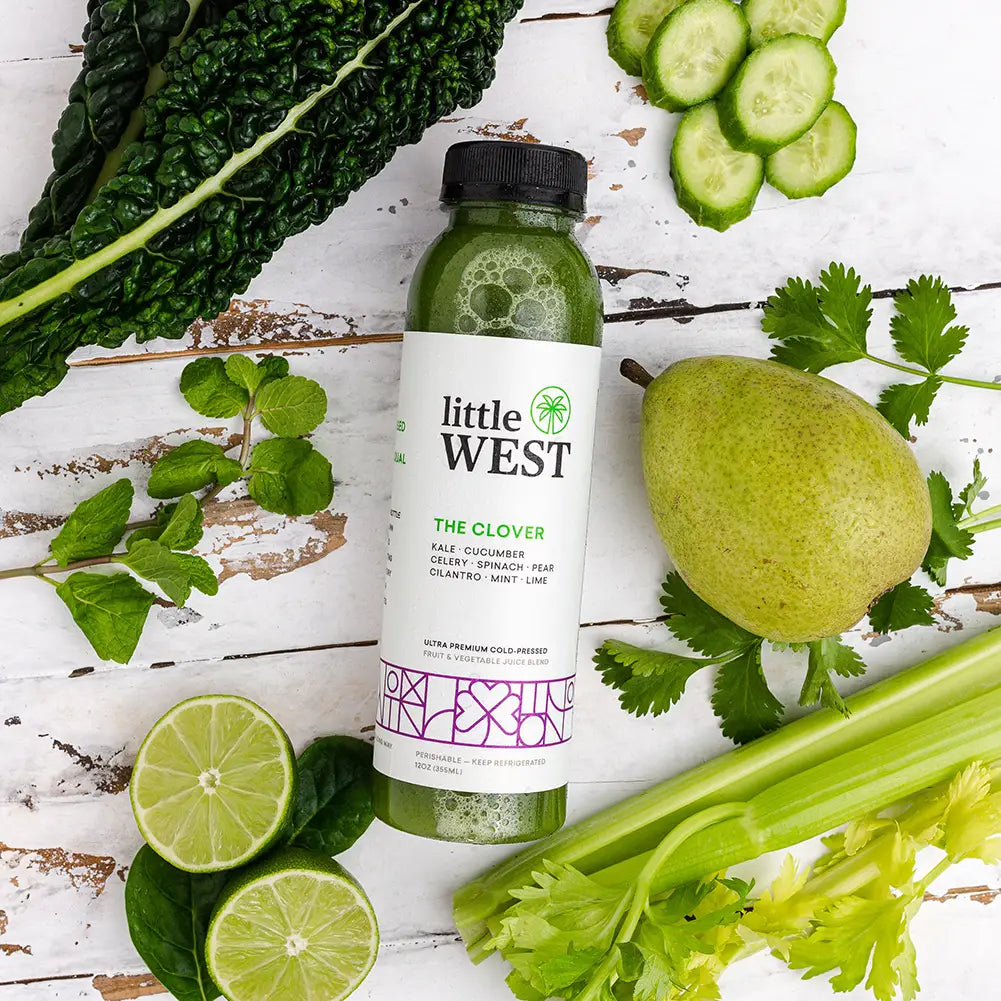
The Clover is packed with kale, cucumber, celery, and spinach. Of course it does!
How to Incorporate Spinach into Your Diet
Try these quick ideas:
- Toss raw into salads.
- Sauté. Sauté. Sauté.
- Add to sandwiches and wraps.
With all the nutrients lurking in spinach, you bet Little West adds it to cold pressed juices. If you see a lean, green, nutrient-packed machine, then good ol’ spinach is likely there.
Is Spinach for Everyone?
Yes, if…
- You are looking to add vitamin K and folate to your diet.
- You want a low-calorie, nutrient-dense veggie.
References
Further Readings: